
There exists within MIM manufacturing a kind of industrial alchemy that speaks to humanity’s enduring desire to reshape the world according to our needs and aspirations. Metal Injection Moulding has quietly revolutionised how we think about making things from metal, collapsing the distance between what we can imagine and what we can hold in our hands. The process asks us to reconsider assumptions we’ve held about metalworking since the Bronze Age, proposing instead that metal can be coaxed into behaving in ways that seem to contradict its fundamental nature.
The Genesis of MIM Technology
Consider the feedstock, that initial amalgamation of metal powder and polymer binder. Here lies the essential insight of metal injection moulding: that we might persuade metal to forget, temporarily, that it is metal. The powder particles, ground to a fineness measured in microns, suspend themselves within a thermoplastic matrix. This compound exists in a liminal state designed for one purpose: to flow.
The mixing process requires attention to detail that borders on ritualistic. Temperature, pressure, mixing duration: each variable carries weight. The proportions matter in ways both immediate and profound, establishing parameters that will influence every subsequent stage of production.
The Journey from Powder to Precision
MIM production unfolds as a narrative with four distinct acts:
Compounding
Fine metal powders marry with carefully selected binders, creating pellets that will serve as raw material for injection machinery
Injection
Under controlled heat and tremendous pressure, the feedstock transforms into a flowable state, filling moulds with geometries that honour no limitation save the designer’s imagination
Debinding
Through thermal decomposition or chemical dissolution, the binder gradually withdraws, leaving behind a fragile metal skeleton that holds its shape through particle-to-particle contact alone
Sintering
In furnaces heated to temperatures that approach the melting point of the metal itself, atoms migrate across particle boundaries, fusing into a solid mass that shrinks predictably whilst gaining the strength and properties we associate with wrought metal
Each stage represents a covenant between human intention and material properties. We heat, we cool, we wait, we measure.
Singapore’s Contribution to MIM Excellence
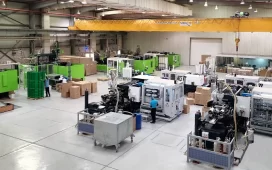
In Singapore, MIM manufacturing facilities have emerged as exemplars of what becomes possible when technical expertise meets rigorous quality systems. The manufacturers there understand something essential about precision work: that excellence compounds across processes. A slight improvement in powder particle distribution multiplies through mixing, injection, and sintering, yielding final components that meet tolerances most machining operations cannot guarantee.
The medical device sector demands this level of precision. Singapore’s MIM production capabilities extend to components destined for surgical theatres and operating rooms, where dimensional accuracy measured in microns separates acceptable from unacceptable. Clean room protocols, ISO certifications, and traceability systems represent not mere bureaucratic requirements but rather a philosophy that every step matters, that quality cannot be inspected into components but must be built into processes.
Design Liberation Through MIM
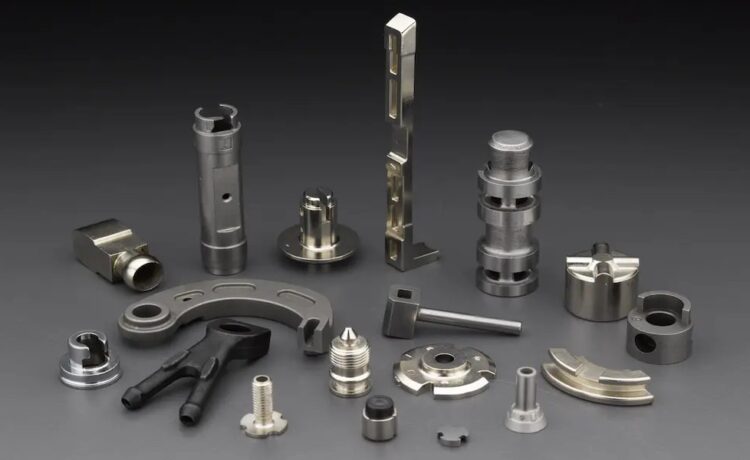
Traditional metalworking carries with it certain constraints. The cutting tool must reach the surface. The die must open and close. Metal injection moulding respects different boundaries. Internal cavities that would require assembly in conventional manufacturing emerge complete from the mould. Surfaces that would demand extensive polishing arrive from sintering already approaching final finish requirements.
This geometric freedom translates into functional advantages. Engineers designing MIM components can optimise wall thickness for strength rather than manufacturing convenience. They can incorporate features that reduce assembly steps or eliminate fasteners entirely. Weight reductions of 30 or 40 per cent become achievable simply by removing material from internal volumes that conventional processes cannot access.
The Mathematics of Manufacturing Economics
MIM technology operates according to an economic logic that inverts traditional manufacturing assumptions. Where machining costs rise linearly with complexity, injection moulding costs remain largely fixed once tooling exists. A simple cylinder and an intricate bracket with undercuts require approximately the same cycle time, the same energy input, the same operator attention.
Volume sensitivity shapes every MIM business case. Below 5,000 units annually, the tooling investment often overwhelms the per-part savings. Above 20,000 units, the economics shift decisively in favour of metal injection moulding. Between these boundaries lies a grey area where traditional methods and MIM compete based on specific component characteristics.
Material Science at the Molecular Level
The sintering stage reveals MIM manufacturing at its most transformative. Atoms diffuse across what were once discrete particle boundaries, erasing the memory of powder origins. Density increases from perhaps 60 per cent of theoretical maximum in the brown part to 96 or 98 per cent in the finished component.
Different alloys respond to sintering with distinct characteristics. Stainless steels sinter readily, titanium alloys demand carefully controlled atmospheres to prevent contamination, and tungsten requires temperatures that challenge even industrial furnace capabilities. MIM processes accommodate this diversity, adjusting parameters to honour each metal’s particular requirements whilst maintaining the fundamental four-stage progression.
Quality as Continuous Verification
Throughout MIM production, measurement serves as both guardian and guide. Statistical sampling catches process drift before thousands of defective parts accumulate. Dimensional verification confirms that shrinkage predictions proved accurate. This commitment to verification reflects an understanding that in manufacturing, hope is not a strategy.
The Path Forward
The future likely holds expanded applications for MIM manufacturing, driven by industries that prize both complexity and consistency. As component designs grow more sophisticated and tolerances tighten further, the advantages of a process that can hold micron-level accuracy across thousands of identical parts becomes increasingly compelling. This represents manufacturing shaped by our evolving understanding of how materials behave and what becomes possible when we align process capabilities with design ambitions through MIM manufacturing.