
Plastic molding injection companies operate with a precision that would satisfy a watchmaker, yet produce components at speeds that would dizzy an assembly line worker from any earlier industrial age.
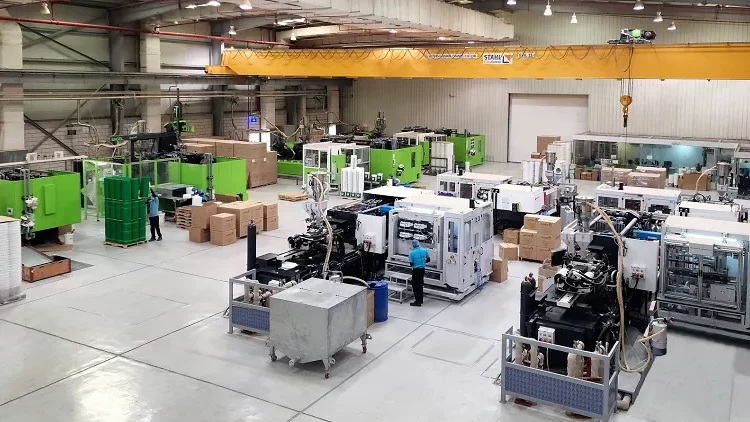
Stand beside an injection moulding machine in operation and you witness a process that has been refined over decades into something approaching industrial ballet. The machine clamps shut with hydraulic force measured in tonnes. Molten plastic, heated to temperatures approaching 300 degrees Celsius, shoots through channels barely wider than a pencil lead. The material fills every microscopic detail of the mould cavity in fractions of a second. Cooling water circulates through passages drilled into the steel. The mould opens, the part ejects, and the cycle begins again. Forty-five seconds, perhaps sixty, and another component joins the growing pile.
The Pursuit of Durability
A production manager in Singapore’s Woodlands industrial estate once described his work as “making things that last longer than the products they go into.” He meant it literally. The plastic components his facility produces often outlive the devices they inhabit, surviving in landfills or recycling streams long after the original product has been discarded and forgotten.
Durability in plastic components emerges from multiple sources. Material selection matters first. Engineering plastics like nylon, polycarbonate, and acetal possess molecular structures that resist stress, heat, and chemical exposure. But material alone does not ensure durability. Processing conditions determine whether those molecular structures align properly or become stressed and brittle.
Plastic molding injection companies achieve durability through attention to variables that sound almost trivial until you understand their effects:
Melt Temperature
Too hot and the polymer degrades; too cool and it does not flow properly, creating weak spots
Injection Speed
Rapid injection can trap air or create turbulence; slow injection may allow premature cooling
Pack Pressure
Adequate pressure compensates for shrinkage; excessive pressure induces internal stress
Cooling Time
Insufficient cooling produces warped parts; extended cooling wastes production time
Gate Location
Where plastic enters the mould affects material flow patterns and structural integrity
A skilled process engineer can examine a failed part and read its history in the failure pattern, identifying which parameter was improperly set.
The Nature of Accuracy
Accuracy in injection moulding involves tolerances that challenge human perception. A manufacturing engineer holds up a small gear, perhaps twenty millimetres in diameter. “The tooth spacing,” she explains, “varies by no more than fifteen microns across the entire circumference. That is about one-fifth the width of a human hair.”
Such precision requires more than good equipment. It demands understanding how materials behave. Plastic shrinks as it cools, and different plastics shrink at different rates. A mould cavity must be larger than the desired part by precisely the amount the material will contract. But shrinkage varies with part thickness, material type, processing conditions, and even ambient humidity.
Singapore’s Plastic molding injection companies have developed particular expertise in dimensional control. The nation’s electronics manufacturing sector demands components that mate precisely with circuit boards and assemblies. Connectors, housings, and mounting brackets must hit tight tolerances repeatedly across production runs stretching months or years.
“We measure everything,” says a quality inspector whose workbench holds coordinate measuring machines, micrometers, and optical comparators. “Not because we distrust the process but because measuring tells us when something is beginning to drift before it produces defective parts.”
The Economics of Efficiency
Cost efficiency in injection moulding follows counterintuitive patterns. The most expensive part of the process often is not the manufacturing but the tooling. A precision mould might cost fifty thousand pounds and require three months to build. That investment must be recovered across the parts it produces.
Consider the mathematics: a mould producing automotive components at forty-five second cycles runs continuously for three shifts daily. In a month, it produces nearly 100,000 parts. The tooling cost per part drops to fifty pence. But if the same mould produces medical device components at two-minute cycles for a single shift, monthly output falls to 7,500 parts, and tooling cost per part rises to six pounds sixty.
This arithmetic explains why plastic molding injection companies structure their operations as they do:
High-Volume Products
Justify expensive, highly automated moulds with multiple cavities
Medium Volumes
Use simpler, less costly tooling with longer cycle times
Low Volumes
Sometimes employ aluminium moulds that cost less but wear faster
Prototype Runs
May use 3D-printed moulds for very limited production
A business development manager in Singapore describes the calculation every potential client faces: “The question is never whether injection moulding is the cheapest way to make one part. It is whether injection moulding is the most economical way to make all the parts you need over the product lifetime.”
The Human Factor
Behind the automation and precision measurement work people whose expertise defies easy categorisation. A mould technician with thirty years’ experience can diagnose problems from subtle changes in part appearance or cycle timing that computerised monitoring might miss. He knows which sounds indicate proper operation and which signal impending trouble.
“You develop a feel for it,” he says, adjusting coolant flow to a mould running automotive components. “The machine tells you things if you pay attention.”
This accumulated knowledge represents the real competitive advantage of established Plastic molding injection companies, the capital that cannot be purchased with equipment budgets alone but must be built through years of solving problems and refining processes.